Showing posts with label J.K. Rowling. Show all posts

Outlines, Beats, and Book Maps!

Wednesday, May 11, 2022

Writers are a quirky bunch, aren’t they? We all have our own way of making the magic, whether writing a novel, or a short story, or even an article. 

Some of us swear by outlines, some of us use a sticky note or index card system, and some of us sort it all with some form of a book map. I’ve used each of the above methods when writing novels, but sometimes, I mash them up and use ALL the sparkly stuff. Like this time around, when I pulled out all my techniques to use at different stages of the work. Here’s a walk-through of my latest novel and maybe you’ll find something that will help you at whatever stage you’re in: 

You may have heard about J. K. Rowling and her famous outlining for the Harry Potter books. I’ve used a (much less detailed) chapter outline in the beginning stage for a novel but this time around, I didn’t have the story quite nailed down; I had an idea. So I started with LOTS of notes about the concept and the characters and a general outline began to evolve. In my head, that is.

So next, I pulled out my Save the Cat Writes a Novel because I wanted to take everything in my head (and in my notes) and put it into beats. I wasn’t trying to create a chapter outline, but that’s more or less what happened, a sort of beats/outline. So in my sparkly notebook, I had all my characters, lots of ideas, and the beats worked out up to about the mid-novel point. And I actually would check my beat notes before I started writing each day. Yay me! 

Now, I know you’re wondering about that “about to mid-novel point” bit. See, I hadn’t quite worked out every little plot point in the several arcs but I knew where/how I wanted each arc to end (that was info in my notes). So with less structure in the middle, I was able to “jump off” into some very interesting "fun 'n games" threads. Or maybe I just got tired of beat notes and felt like I could wing it. Either way, it worked! 


Finally finished, I needed whole-novel editing and I made a book map template. I wanted to make sure that each chapter had an arc and carried the plot(s) forward; I needed to make sure that the characters (an ensemble group) had a mostly equal share in the spotlight. And I needed page numbers for quickly going back to make corrections or additions in plotting (or spelling of names or hair color changes or dogs’ comings and goings). I am not going to lie, y’all, this book map has been worth every minute of the work. My novel may not be as complicated as Rowling’s series, but with a couple mysteries and romance or two, one can get caught up in the weeds. The book map pulled me out of the weeds and into the clear every time. Whew! 

I’m almost to the end of editing/mapping and I have one more step. But that’s a quirky tip for next time, y’all, so stay tuned! And if you have a quirky step in your novel-writing, share! I mean, where do you think I came up with my steps?


Read More »

Breaking the Rules With Middle Grade Novels

Sunday, January 19, 2020
Have you read Harry Potter and the Sorcerer's Stone? J. K. Rowling breaks the middle-grade rules that all of us middle-grade authors are told are very important to follow, especially if we are debut authors. When J. K. Rowling finally had this manuscript accepted, she was a debut author, of course, and it was accepted (after many rejections) by a mainstream publisher. And of course, the rest is absolutely history. But let's start with the rule-breaking...

1. The book opens with Mr. Dursley as the main point of view character. Mr. Dursley is a man (not necessarily young although he does have an infant son) who works for a drill company. He is not very nice. He doesn't even like or want to mention the name Harry Potter, who turns out to be our hero.

2. The rest of the first chapter is told in either Mr. Dursley's viewpoint or the viewpoints of two very old wizards, Dumbledore and McGonagall.

3. Harry is a baby!

The rule all of those points above are breaking is that chapter one does not start with our hero as an 11-year-old boy. Another rule: it's not written in a child's point of view (it's in omniscient point of view). It actually starts with the point of view of adults, and one of them isn't too fond of Harry!

I recently read this first chapter to my daughter who is now the perfect age for a middle-grade reader (she turned 9 in October). She loves the Dork Diaries series, but I want her to love Harry Potter. So I started reading it to her because I knew if I left it to her, she would not connect with this first chapter. How many children have made their way through that first chapter of adult POV to get to the other side where we meet Harry as an 11-year-old boy because they knew how great the books are? Or they had seen the movies? Or someone read it to them? How can we be sure? But while I read the first chapter to Katie, she kept saying, "I'm confused. I don't understand. Where is Harry?"

Luckily for all of us, some editor at Scholastic Books saw the brilliance of the way J. K. Rowling wrote this book and let her break the rules (another rule she broke--the length--it is way longer than most middle-grade fiction books, even for the fantasy genre).

Now all of this is to say that these Cinderella stories do not happen very often; and if you are writing a middle-grade novel, and you are a new author without a big following, you should follow the rules! What are the rules? What are middle-grade readers expecting?
  • A point of view character who is around 12 or 13 and who is going on some kind of adventure without a lot of parental or adult help
  • A manuscript that is 30,000 to 50,000 words long
  • A problem that can be serious (although funny is also good in middle grade), but there would not be drug abuse, sex, or any other issue, like cutting, that might be the focus in a teen novel. An adult or teen character in the novel can have a problem like this, but it's not happening to the main character in middle grade. The main character is dealing with problems that kids have--crushes on the opposite sex, puberty, not fitting in at school, family drama, etc.
  • The novel begins with the point of view character in the moments of his or her life before the catalyst occurs and thrusts them into the events of the novel problem
  • Authors should not try to sound cool or use slang
The best way to figure this all out is to read a lot of popular and current middle grade books, so you can get a feel for the voice, characters, and the way problems are dealt with. Don't just remember your favorite books from your youth. Kids change, just like everything else, and so it's important to understand the genre today.

If you are a rule-breaker and you really believe in what you are writing, then I'm here to tell you that if you work hard, you may get a lucky break like J. K. Rowling, or you can self-publish and work hard to build your audience. However, to give yourself the best chance, follow those rules above. There are so many wonderful middle-grade novels out there with those rules, and they exist because kids like to read books with them. Middle grade readers may not be able to tell you those rules--they just know what they like.

As for Harry Potter, I'm so excited we are reading these books together at this point, and I can't wait to share the love of this rule-breaker with my daughter.

Join Margo's WRITING MIDDLE GRADE AND YOUNG ADULT FICTION: A STUDY AND WORKSHOP online class which starts on Tuesday, January 21. To read the syllabus and register for the class, click this link. Margo is the author of the middle-grade novel, Finding My Place: One Girl's Strength at Vicksburg, published by White Mane Kids. She is currently working on a prequel to the book. 
Read More »

Hidden Gems: Quotations Author's Use

Sunday, May 28, 2017
There are different types of readers in this world. There are those who get the book and skip right to the first chapter, ignoring everything else. There are those who take their time to read the author's bio on the back flap, and who take in the intricacies of the front cover, before diving in to the story.

And then, there are people like me.

Books fascinate me. Not only by the content (which, undoubtedly, is the most important part), but also by how they smell. How they feel. The covers and the pages and the dedications. One of my favorite parts, however, is the quotations authors use after their dedication pages, and before their first chapters.

The quotations span all genres, time periods, and cultures. Some are from presidents. Others from poets. I’ve seen snippets of Shakespeare, Martin Luther King, and Robert Frost.

To me, each quotation is as much a part of the book as the characters and the setting. These quotations offer a glimpse into the heart of the story. The quotation is a clue – a small puzzle piece – which tantalizes me to unlock its meaning.

I read these quotations before anything else, and then revisit them once I’ve finished the book. This simple act is as delightful as opening an unexpected gift. They provide a deeper connection to the author’s purpose. It’s as if the author and I share an inside joke or a secret story to which others are not privy. The quotations connect us beyond the story and remind me that the themes in my favorite books transcend time.

I have my favorites, of course.

Stephen King’s Needful Things:
“I have heard of may going astray even in the village streets, when the darkness was so thick you could cut it with a knife, as the saying is . . .
                         – Henry David Thoreau, Walden

The Grass is Singing by Doris Lessing:
In this decayed hole among the mountains
In the faint moonlight, the grass is singing
Over the tumbled graves, about the chapel
There is the empty chapel, only the wind’s home.
It has no windows, and the door swings,
Dry bones can harm no one.
Only a cock stood on the rooftree
Co co rico, co co rico
In a flash of lightning. Then a damp gust
Bringing rain

Ganga was sunken, and the limp leaves
Waited for rain, while the black clouds
Gathered far distant, over Himavant.
The jungle crouched, humped in silence.
Then spoke the thunder.
                          -T.S. Eliot, The Waste Land

Harry Potter and the Deathly Hallows by J.K. Rowling:
Death is but crossing the world, as friends do the seas; they live in one another still. For they must needs be present, that love and live in that which is omnipresent. In this divine glass, they see face to face; and their converse is free, as well as pure. This is the comfort of friends, that though they may be said to die, yet their friendship and society are, in the best sense, ever present, because immortal.
                           -William Penn, More Fruits of Solitude

And, lastly.

Cutting for Stone by Abraham Verghese:
And because I love this life
I know I shall love death as well.
The child cries out when
From the right breast the mother
Takes it away, in the very next moment
To find in the left one
It’s consolation.
                         -Rabindranath Tagore, Gitanjali


If you have never noticed these quotations before, try reading them first next time. I promise they will not disappoint.

Bethany Masone Harar is an author, teacher, and blogger, who does her best to turn reluctant readers into voracious, book-reading nerds. Check out her blog here.
Read More »

Harry Potter Fans: Many of Us Need to Calm Ourselves Down

Thursday, September 29, 2016
One of my dreams came true when J. K. Rowling co-authored the play, Harry Potter and the Cursed Child, and someone in the publishing world wanted to make money and decided to print and sell it as a book. I did not stand in line at midnight to buy it, but it is one of the only hard-cover books I've bought in a long time. Before I had a chance to read it, (I was finishing up another lovely book, Me Before You), I read a lot of negative tweets and Facebook posts about the story. And I'll admit I was disappointed. I was hesitant to read the book because I didn't want my excitement to go away.

But I did read it, and I loved it. Yes, it is a play and it is harder to read than one of the seven tomes all us Harry Potter fans love so much. But I thought it was an excellent story--it brought in all the beloved characters--even the dead ones, and one of the most heartbreaking plot events in all seven books, Cedric Diggory's death. Also while reading, I kept thinking: I really want to see this as a play. How will they do all this magic on stage? This will be so cool!

Then those negative social media messages really started to bother me. I put a post on my own Facebook page about how I guessed I was in the minority, but I was not afraid to state that I really liked Harry Potter and the Cursed Child.  Shockingly, I discovered I was not alone. Several of my smartest friends (wink, wink) also loved the book and were obviously not afraid to share this fact on someone else's Facebook wall (i.e., mine).

So this post is not for those of you who loved the book, although please put in the comments that you did or why you did, if you would be so kind. But it is for those of you who didn't like it and feel the need to spew everywhere your negativity. I feel you need to CALM DOWN. I mean, you are entitled to your opinion, even if it's wrong. Here's an example of a tweet, which is negative, but on the tame side:

Look, why are you fighting this? We all know J.K. (Jo above) Rowling is  a genius. Her novels brought back a passion for reading children's and YA books. We also all know that if she writes book 9 or releases the next segment of the Harry Potter story as a series of haiku, written in Sanskrit, we are still going to buy and devour it, and shed more tears over Snape and Dumbledore. I mean, have you, personally, ever written an eight-book series worth more money than you could spend in your lifetime? I didn't think so. Please CALM DOWN.

Take a deep breath, write your tweet/review/Facebook post in a nicer way, such as: I just finished HP8. Okay, I didn't love it, but I did like _______________________. (Fill in the blank with something you liked.) There you go, I bet if you're a true Harry Potter fan, you can find one thing in the play that you liked.

I'm not trying to make you feel guilty. I'm just trying to convince you that as readers and writers, we owe it to other authors to perhaps offer constructive criticism, but to be respectful of the talent and time it takes to create these masterpieces, and show each other a little more love.

As for me, you'll find me passing on Harry Potter and the Cursed Child to my family members. My mom currently has it.

Margo L. Dill is a children's author, editor, blogger, and teacher, living in St. Louis, MO. You can find out more about her and her books by visiting her blog at http://www.margoldill.com, where she is currently musing over the meltdowns of Kindergarten. She also teaches a novel writing class for WOW! in the WOW! classroom.   


Read More »

What Successful Writers Do (Besides Writing)

Monday, May 02, 2016
The guy at the bank and I were discussing my business account when I said, “I’m my business. I’m a writer.”

He immediately leaned forward in his chair, eager to hear more. What do I write? Have I been published? Would he know any of the publications? People are often excited to meet a real live writer. I’m not sure why. Writing’s not that exotic, as jobs go. I mean, I love my job but some days, yeah, it can be a grind just like any other job.

And then the bank guy pulled up my account. I could see his keen interest suddenly turn to surprise, and I was pretty sure I knew why. People think writers make a ton of money. I’m not sure why about that, either. I mean, sure, Stephen King, J. K. Rowling, those superstar writers do make a ton of money. But most of us? Not so much.

At least, not from writing. But the bad news for writers is good news for wannabe writers. Namely, writers often want or need to supplement their income. And so they look for other ways to bring in the bucks. Like teaching.

Oh. My. Word. There are so many gifted writers out there who work as instructors in just about any field of writing you can imagine. Here at WOW!, you can find all kinds of classes, offered from all kinds of professionals. But we’re not the only ones offering courses so if you don’t find what you’re looking for here, just take a spin around the web. You’ll find more writing courses than you can shake a pen at!

And you know what else all those excellent writers are doing? They’re mentoring. There was a time when mentoring was something a writer was just lucky enough to find from an older and wiser writer who offered a helping hand. Now, chances are good that you can find a mentor who’ll happily take you on if your writing’s at a certain level—and you’re willing to pay a fee.

Search professional writing organizations for mentorship programs, or search by genre. You can even search plain, old "Writing mentorships."Thanks to the wonders of technology, mentoring doesn’t require face-to-face meet-ups. But make sure that you thoroughly vet a mentor’s credentials before you sign the dotted line and send money.

Oh! And don’t forget workshops! Many successful writers organize workshops, retreats, or conferences. You can get a ton of instruction in just a couple hours or a couple days, and you can meet like-minded writers, sharing a similar journey. Make new friends or even critique partners! (Or maybe find a mentor?)

Yep, the world is teeming with talented writers who offer lots more than just their latest books. And they offer their talents in a way that’s sure to meet any budget. There’s just no excuse for a wannabe writer not to take advantage of some of the best brains in the writing business. And then one day, you, too, can visit the bank and impress the heck out of someone.

Well, until that someone sees your bank account.

~Cathy C. Hall

Read More »

Your Cinderella Story Can Come True

Sunday, May 03, 2009
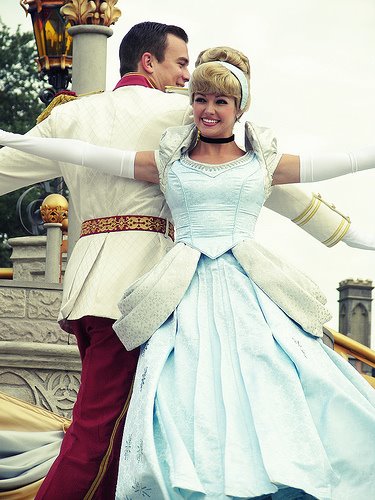
When you were a little girl, did you ever dream about being Cinderella? You know, playing and singing with the mice and the birds, finding your Prince Charming, and showing those ugly stepsisters that you really were the special one. I know I did--I wanted my own fairy godmother, too. "Bippity-Boppity-Boo!"

Last month, a teacher friend asked me to come and talk to her students about what a "real" writer does. One question she wanted me to answer was, "How much do you write that actually never gets published?" Boy, she was asking the right person! So, while preparing my talk, I decided to include information about how many rejections I had received and how many of my picture book stories were still searching for a home, and so on. But would fourth graders be impressed with my statistics? So, I wanted to find the perfect Cinderella story to wow them and show them that you should never give up on your words.

J.K. Rowling has a great Cinderella story, and she would be somebody that the kids knew had been wildly successful. The story is that J.K. Rowling was a single mom, living on state benefits while she wrote the first Harry Potter manuscript. She got her idea in 1990, wrote for five years (sketching out the other six books, too), and a publisher finally accepted it in 1996 after being turned down by several large publishing companies because the book was too complex for kids! She did have an agent that believed in her--so even with an agent, the rumor is she was rejected 12 times by publishing companies. And you know the rest of this Cinderella story--she is now reported to be worth over 1 billion dollars.

When J.K. Rowling sat in coffee shops writing her novel, do you think she thought she would see Harry Potter on the big screen some day? Really? Sure, we all dream, but we also know that it's tough work. Here are her words explaining this time (from an interview on-line): "I had lots of rejections. But I expected everyone to reject me, so I was already braced for failure. However, I loved Harry so much that I just wanted to get him into print whatever the cost in emotional energy," she said. (From Accio Quote! website)

So, what does all this Harry Potter and Cinderella stuff have to do with you? Well, you really could be the next Cinderella story, couldn't you? With hard work, perseverance, and determination, you could see your beloved characters charming millions of readers. Believe it! And remember. . ."A dream is a wish that your heart makes. . ." (from Cinderella)

Happy writing!
Margo Dill
http://www.margodill.com/
Read These Books and Use Them! (blog)
photo by Raymond Brown http://www.flickr.com/
Read More »
Powered by Blogger.
Back to Top